Trust AI with more of your technical support queue
Set what each agent can access and do, safely change how it works, and continuously evaluate performance once it’s live.
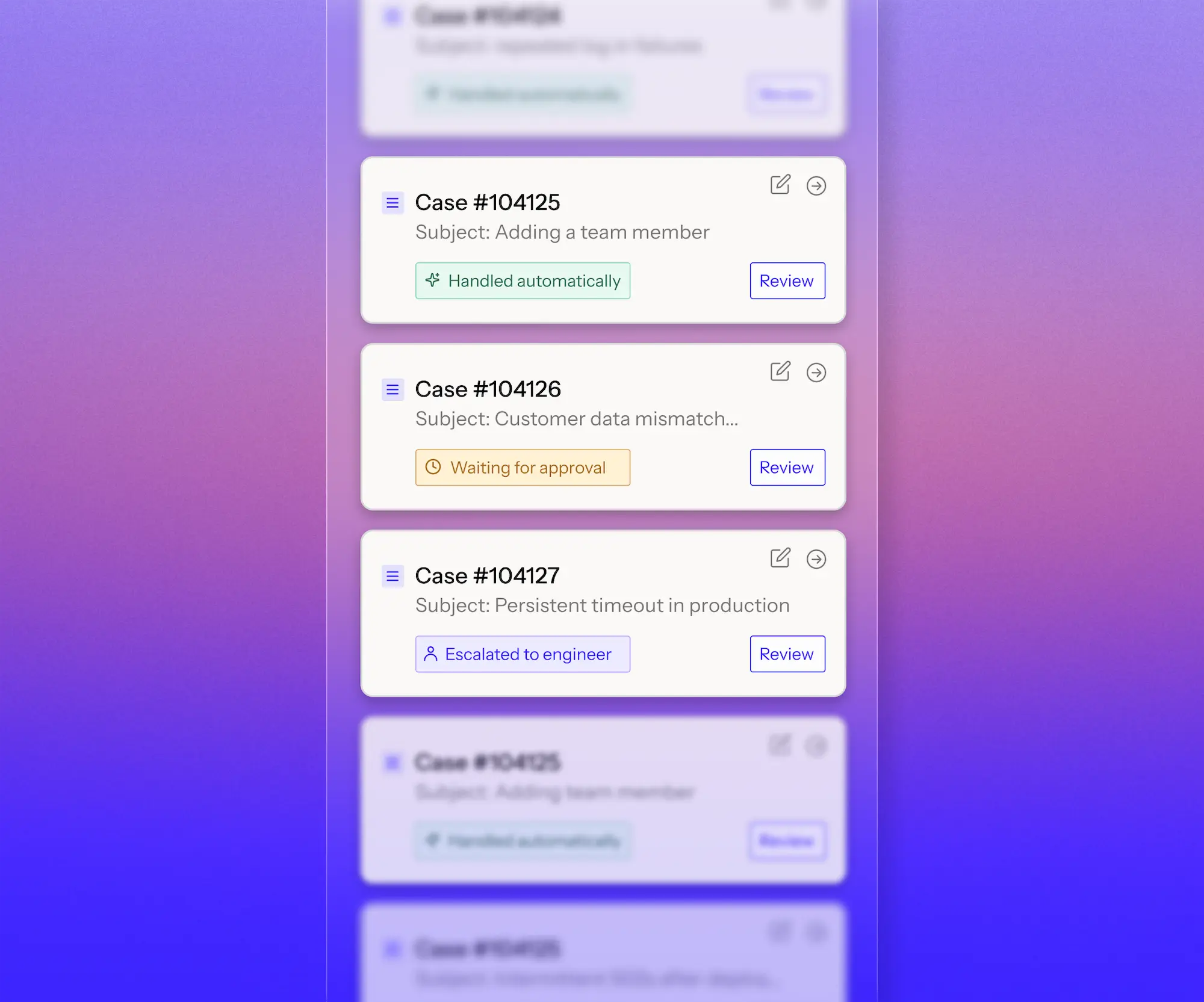
Set what each agent can access and do, safely change how it works, and continuously evaluate performance once it’s live.











Set what each agent can see and do, who can manage it, and where human approval is required.
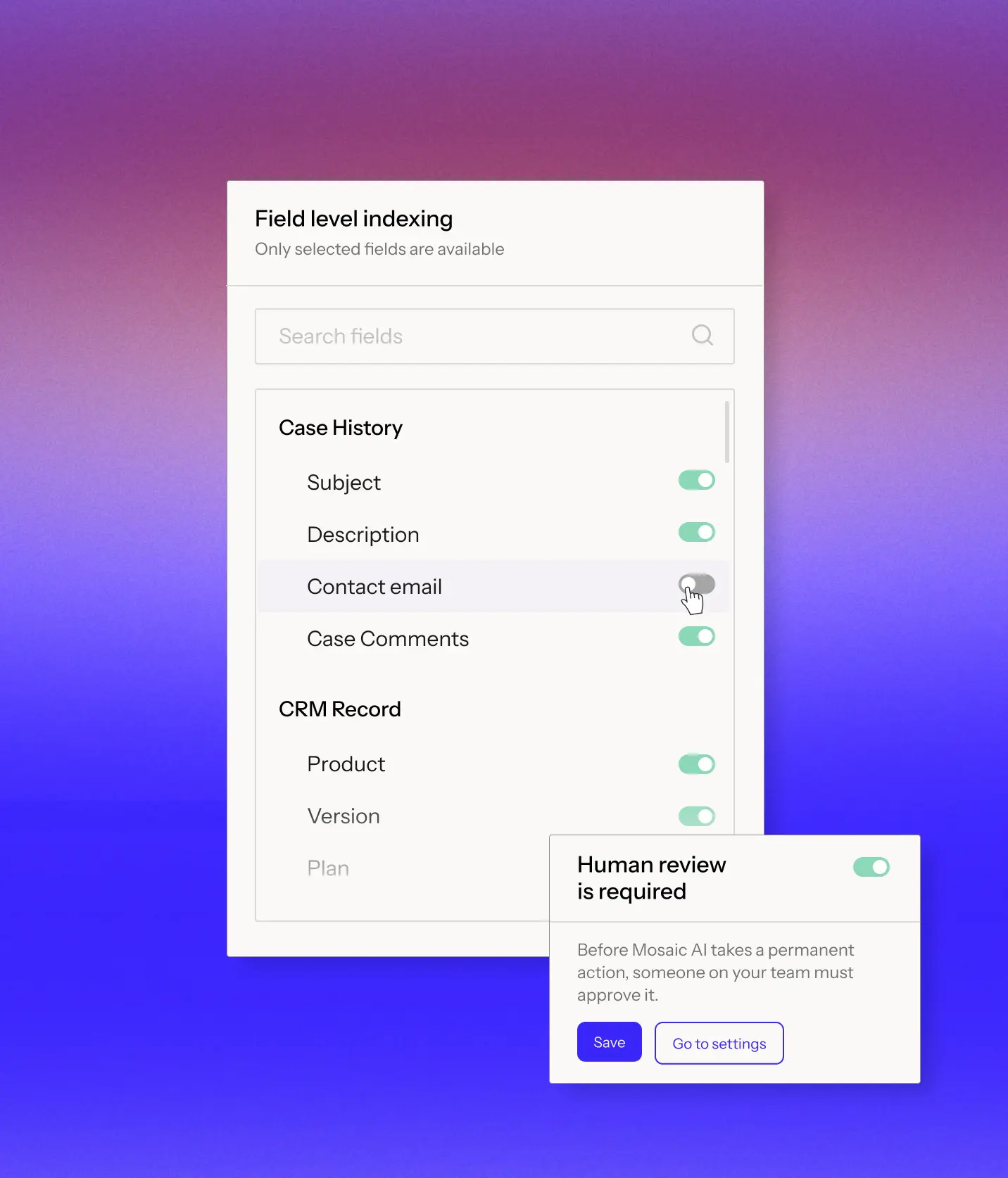
You choose the tools, sources, and actions each agent can access.
You decide who can run each agent and who can change how it works.
You control what each source sends into Mosaic AI, down to individual fields.
You can require a person to review and approve any action before it runs.
Run agents against real support work, compare performance across versions, and keep every change reversible.
See how agents investigate, decide, and act before they touch live work.
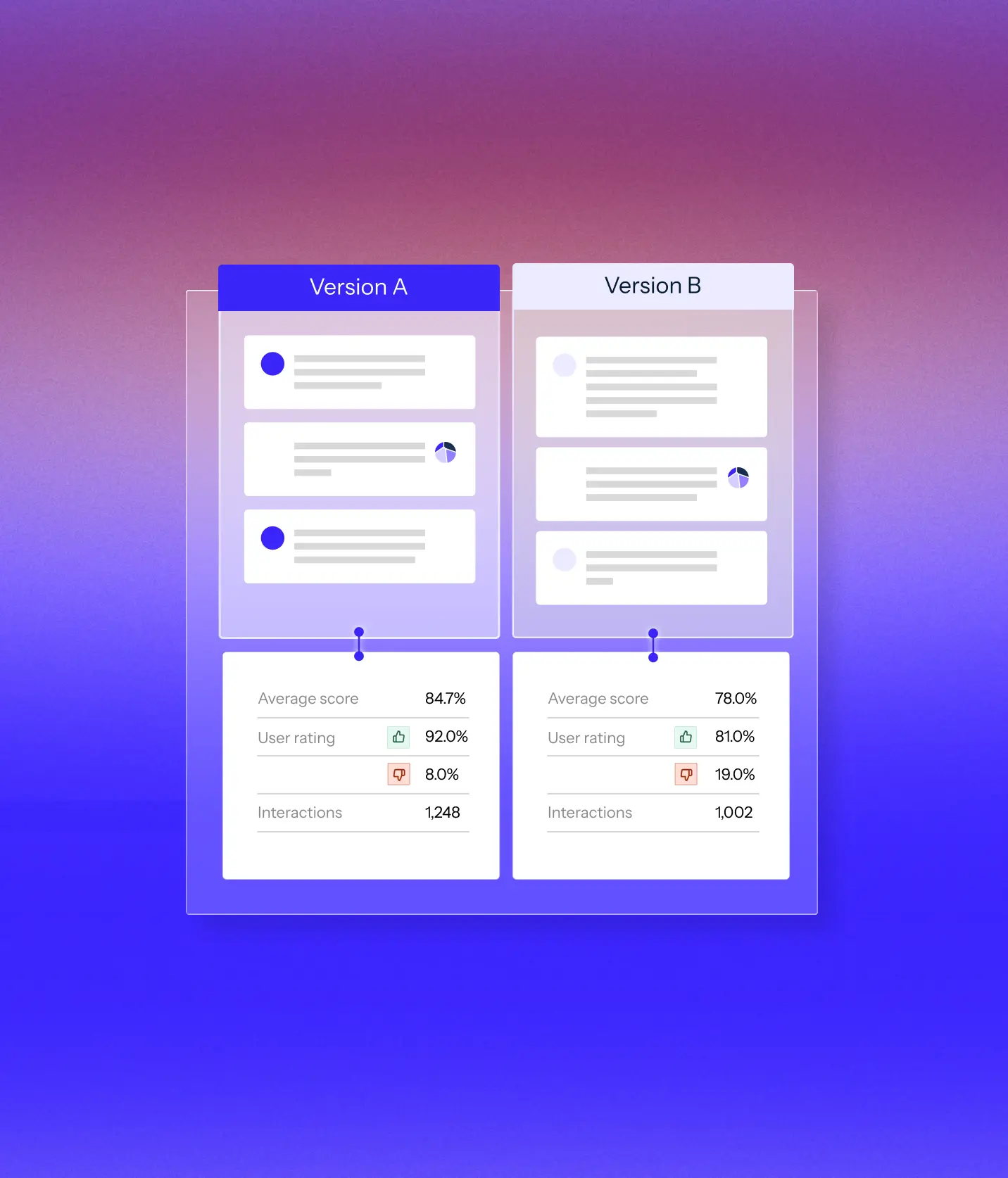
Run the same cases through different versions and see which one performs better.
Track every change, measure its impact, and return to a previous version whenever needed.
See how agents behave in production, trace decisions back to their sources, and use scoring and rep feedback to make each version better.
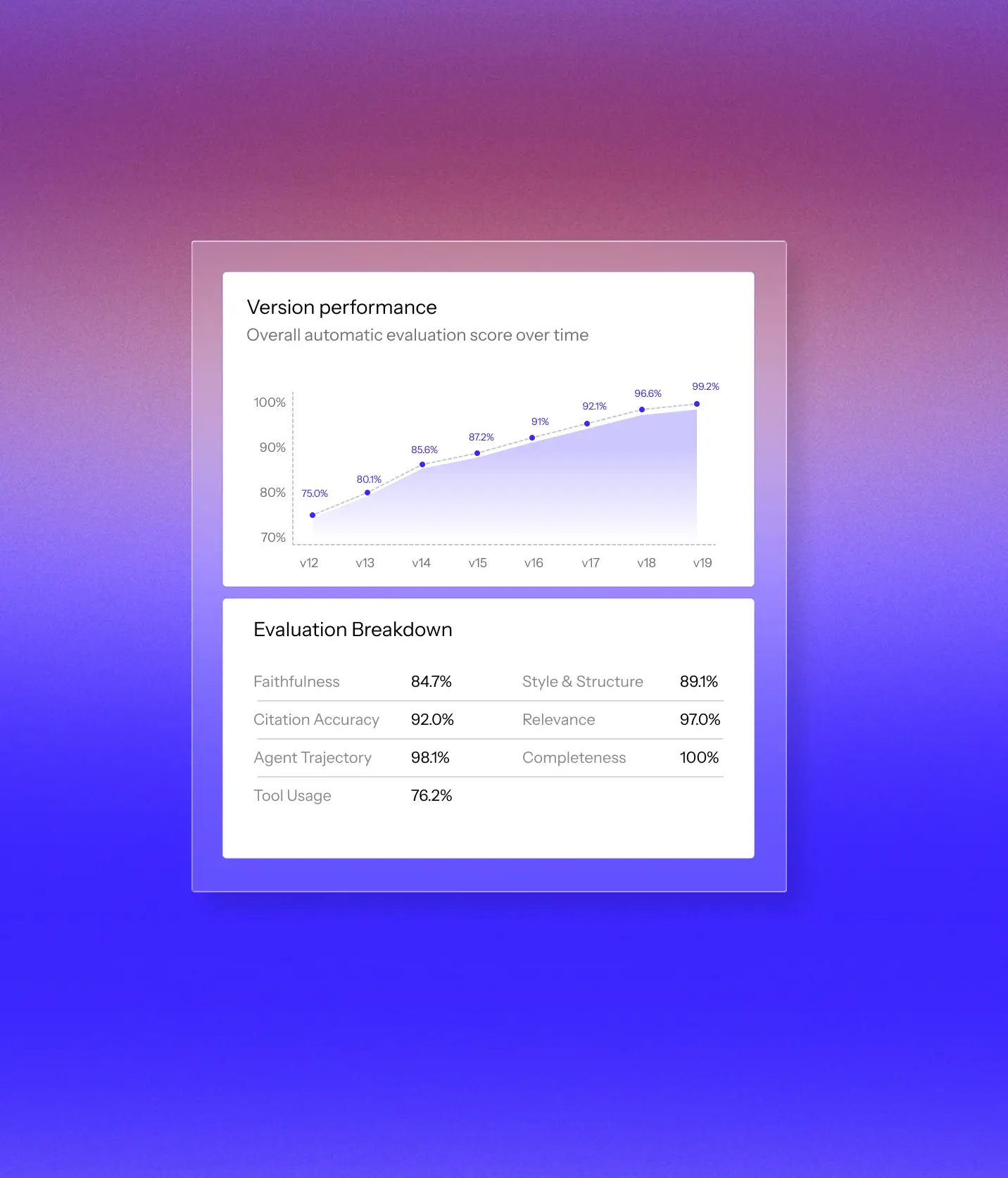
Automatically evaluate agent work and surface opportunities to improve.
See the evidence behind each response so reps can quickly verify how the agent got there.
Rep feedback becomes new knowledge that helps correct future answers and improve similar cases.
See how Mosaic protects your data with enterprise-grade security, access controls, and encryption. Review our compliance standards, policies, and monitoring practices in our Security & Trust Center.
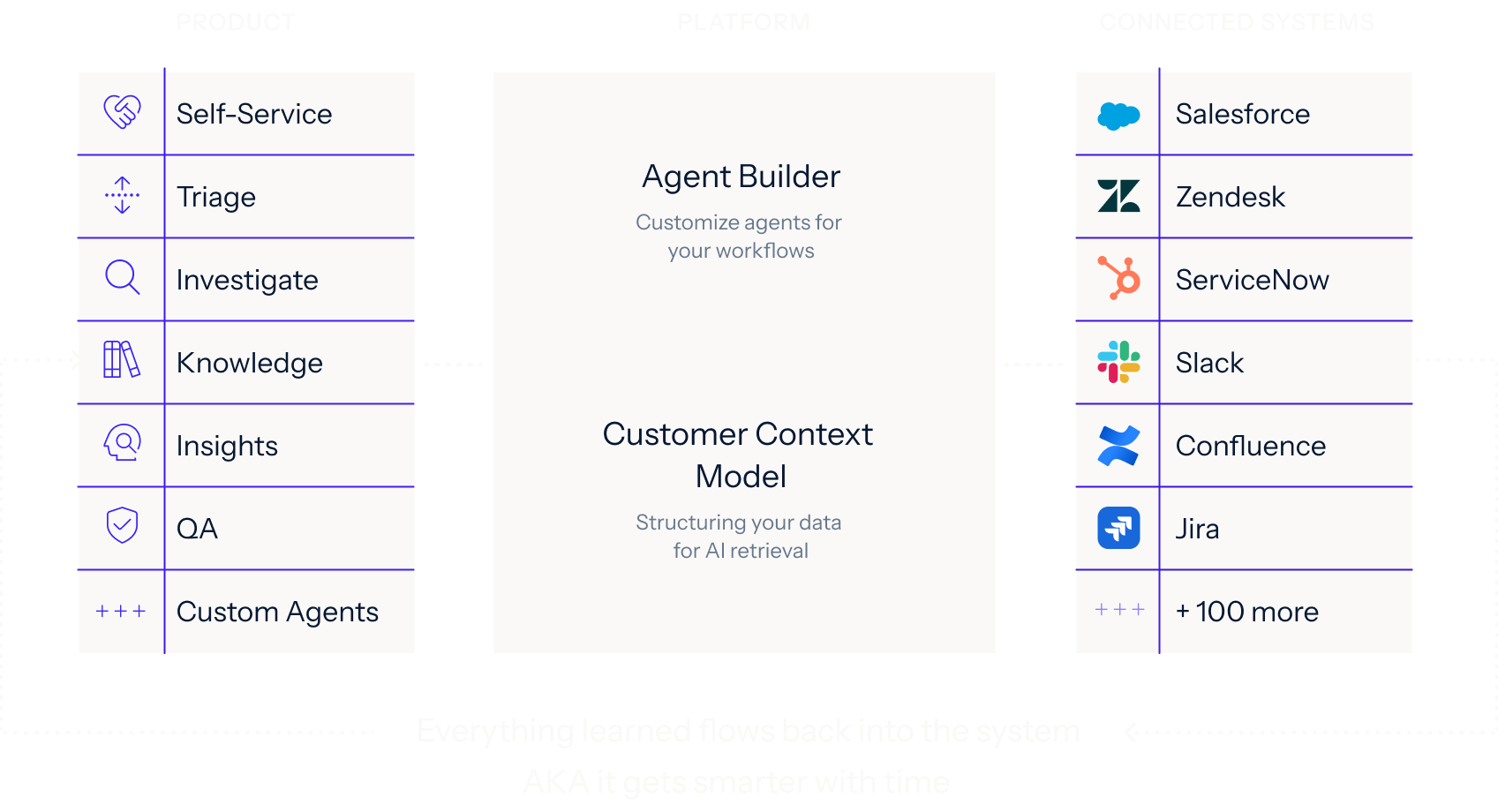
Connect your systems once, then build AI agents for any workflow on one shared framework. Every agent uses the same data, integrations, and controls, so you can expand without adding another point solution.
Learn more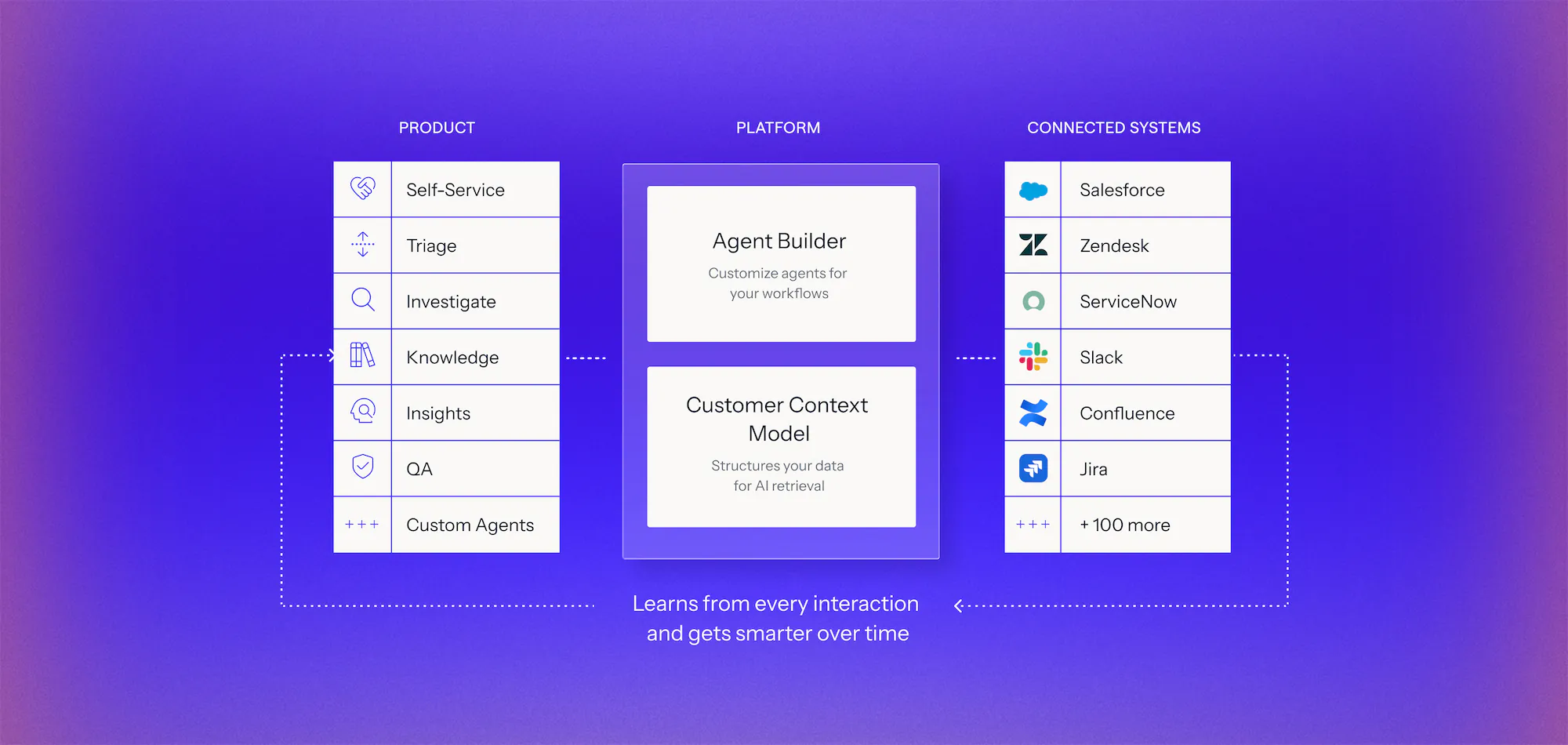
We analyze your real case data, at no cost, to find where time, effort, and spend accumulate, what can be automated, and how much it would lower your cost to serve.
You get a live environment built for your top use cases, running on your own systems, using your own case history. You see the result before you sign anything.
Deployed on top of Salesforce, Zendesk, and the rest of your stack. No migration, no developer resources, deployment expertise included.
Governance is how you decide what AI agents can access and do, test changes before they reach customers, and track performance once agents are live. With Mosaic AI, you set those rules for every agent from one place, so you can give AI more of the queue at a pace your team is comfortable with.
You choose which sources, tools and actions each agent can use, and you control what each connected system sends into Mosaic AI, down to individual fields. For example, a self-service agent can be limited to approved knowledge articles, so customers never see internal case notes. You also decide who on your team can run each agent and who can change how it works.
Yes. You can require a person to review and approve an action before it runs, such as sending a reply or updating a case. Many teams start agents in draft mode, where every response is reviewed, and then automate more as performance proves out.
Run the agent on your own cases to see how it investigates, decides and acts before it touches live work. When you change an agent, you can run the new version on the same cases as the current one and compare the results side by side. Every version is saved, so you can roll back at any time.
Mosaic AI automatically evaluates a sample of each agent's conversations every day. It scores faithfulness, citation accuracy, relevance, completeness and whether the agent used the right tools and steps. Scores are tracked by version, so you can see whether each change improved performance, and you can open any conversation to see the reasoning behind its score.
Every answer shows the sources behind it, so reps can check how the agent got there. When reps flag a wrong or incomplete answer, they can explain what was missing, and that feedback goes back into your knowledge so future answers on similar cases improve.
We’ll analyze a sample of your real cases, identify where Mosaic can have the greatest impact, and show how it would work in your current support stack.