Key takeaways
A letter from Alon Talmor, founder and CEO, Mosaic AI
Every enterprise technical Support leader I talk to is under the same pressure to show that their AI investment is paying off. The problem is that most of the tools they’ve been sold were designed for B2C environments with simple service requests, repeatable questions, and single-product contexts.
Enterprises are fundamentally different. Support teams are required to manage large product portfolios, fragmented systems, and technical customer needs.
I spent years in academia studying how machines reason over complex information, and at Salesforce watching how enterprise support teams operate. The same gap kept appearing: Technical support teams were sitting on enormous volumes of customer intelligence locked away in tickets, calls, CRM records, and product usage data, with no systematic way to act on it before something went wrong.
As AI accelerates product development cycles, the challenges for support teams to keep pace with the volume of new products and features is growing. Every new release adds another layer of knowledge that Support teams need to absorb, and another layer of obsolete knowledge and documentation that must be reconciled. The organization becomes more capable of building while becoming harder to explain.
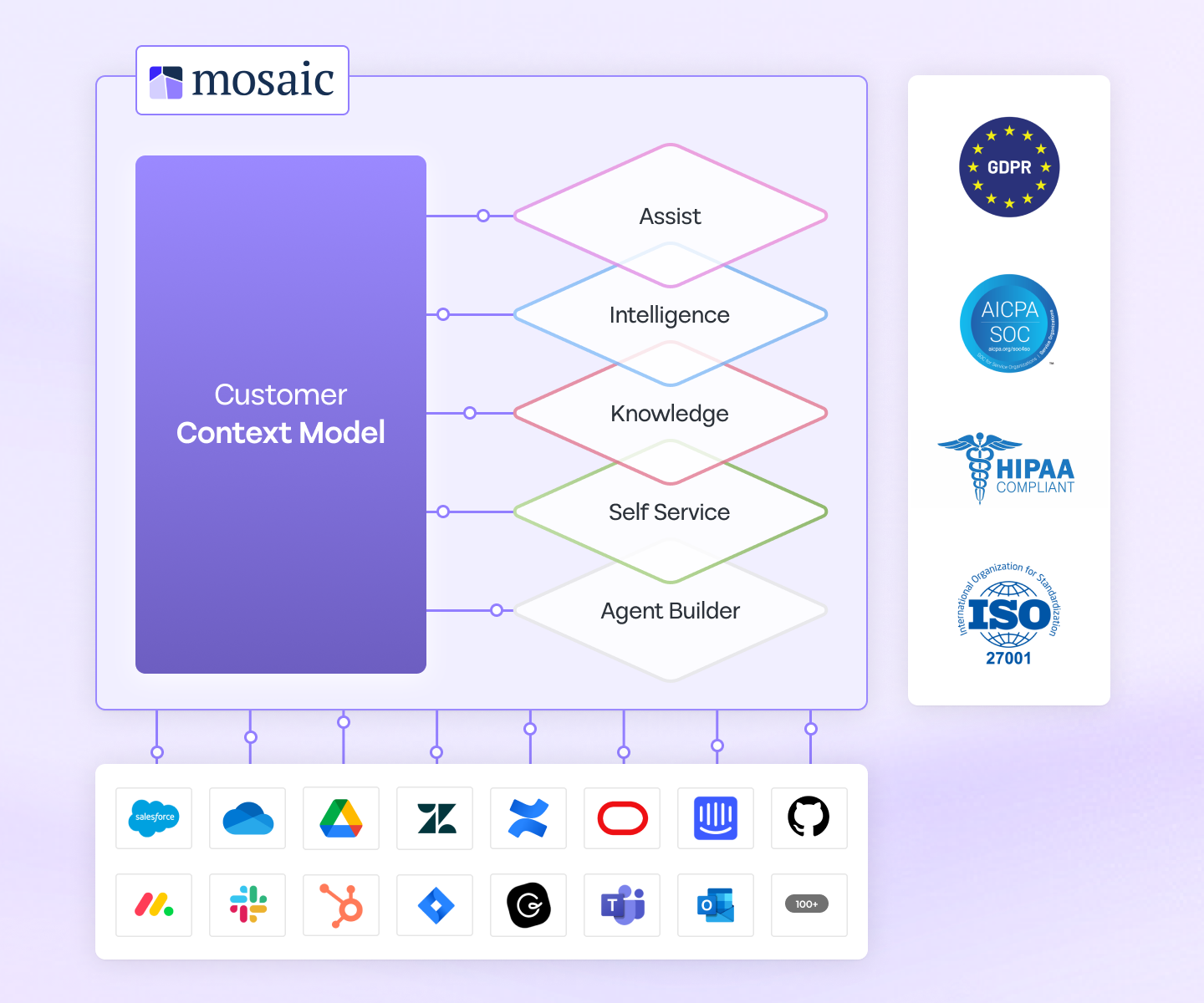
Today we’re announcing the launch of the Mosaic AI platform for enterprise technical support teams. Built by AI PhDs, Mosaic’s enterprise AI platform connects data from hundreds of fragmented tools, enriches it with the unique context of a company's products, customers, people, and processes, and powers a suite of ready-made agentic AI products that deploy in weeks. By incorporating deep product, customer, and team context, the platform deflects cases, surfaces answers and account history, and recommends next steps for support agents, while continuously identifying knowledge gaps and flagging customer or product risks before they escalate.
One of our customers, Point of Rental, reduced case resolution time by 44%, reached 92% CSAT, and reinvested their savings into customer experience. This is AI that changes the business impact your support teams are capable of delivering.
To our current customers: you showed us where the real problems were and trusted us to solve them properly. Everything we've built is shaped by that. Thank you.
To everyone reading this for the first time: the market is full of AI tools that will make your team incrementally busier. We built something for the leaders who are ready to ask what it's actually delivering.
Alon Talmor, PhD.
Founder and CEO, Mosaic AI