About Mosaic AI

The future of support is product-led.

Technical support has spent decades getting better at handling problems. The next era is about eliminating them. Founded by AI PhDs, Mosaic AI is helping support teams get there first.

See open roles
Group of diverse people wearing white shirts, smiling and seated or standing indoors around a table with plants.

Trusted by technical support teams at

Why we built Mosaic AI

Support got better at treating symptoms. Now, it’s time to treat the cause.

“Support teams were never short on answers. They were short on time to find out what was actually wrong. That’s the problem we are helping technical support teams to finally solve with Mosaic AI.”
Alon Talmor, CEO of Mosaic AI

For years, support teams got faster at answering, better search, routing, and macros. Then AI made faster answers ubiquitous.

But technical support was never really about answering faster. It’s about finding the root cause, in products where every install is configured differently and the same symptom means something different for every customer.

Without it, the AI simply guesses confidently and moves on, leaving your best support engineers to check its work. The same cases just keep coming back, and cost to serve never moves.

We built Mosaic AI to fix that.

Treating the symptom
  • The case is closed
  • Deflection goes up
  • The same issue returns next week
  • Experts check the AI’s answers
Treating the root cause
  • The cause is found, evidence-backed
  • Fixed at the source
  • Every affected customer is protected
  • Experts focus on the hard cases
Where support is going

From urgent to preventive care

We believe technical support is moving through three waves. Most teams are somewhere between the first two today. Mosaic AI is building for all three.

Diagnose once. Prevent everywhere.
WAVE 1

Capture

Every case, log, and conversation is recorded and connected, so nothing your team learns gets lost.

WAVE 2

Diagnose

Mosaic AI investigates alongside your team, connecting the customer’s setup, product behavior, and past cases to find the cause. You get the evidence to fix the issue and help others facing the same problem.

WAVE 3

Product-led

The product and the customer talk directly. Problems are caught before they become cases, and support is measured on what it prevents, not what it absorbs.

AI you can trust starts with knowing who built it

Mosaic AI was founded by AI PhDs and NLP professors whose research focuses on complex reasoning for question answering. That's the same problem technical support teams face every day: reasoning across configurations, logs, and product terms to find what's actually wrong.

40+ years

Combined experience in AI/ML research and industry

100+

Research papers, each cited more than 30 times

40,000+

Combined citations across our researchers’ Google Scholar profiles

40 years

Combined experience across enterprise and industry roles

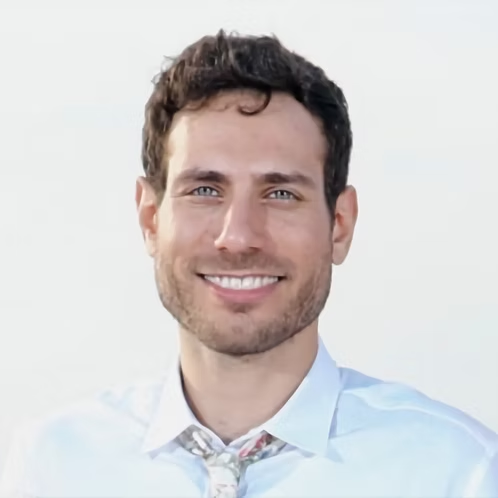
Dr. Alon Talmor

Founder & CEO
PhD in Natural Language Processing
Tel Aviv University

AI researcher and entrepreneur whose doctoral research
focused on reasoning for question answering. Previously
founded BlueTail, acquired by Salesforce, where he served
as Chief Data Scientist of Data.com. Led AI gamification
research at the Allen Institute for AI.

Prof. Tom Hope

Principal AI Scientist
Assistant Professor
Hebrew University of Jerusalem
AI/ML experience since 2011

Leads research on AI agents for scientific discovery at Hebrew University and the Allen Institute for AI. Recipient of the Azrieli Early Career Faculty Fellowship. Previously led enterprise and startup AI research.

Prof. Jonathan Berant

Chief Scientist
Associate Professor, Tel Aviv University
AI/NLP research since 2006

Researches large language models and AI agents, focusing
on reasoning, retrieval, and alignment. His work advances
how AI systems use knowledge, solve complex problems,
and collaborate.

Ori Yoran

Research Lead
NLP PhD candidate, Tel Aviv University
8 years in AI research

CS PhD candidate in Natural Language Processing. Specializes in complex reasoning, multi-hop question answering or reasoning over multiple modalities.

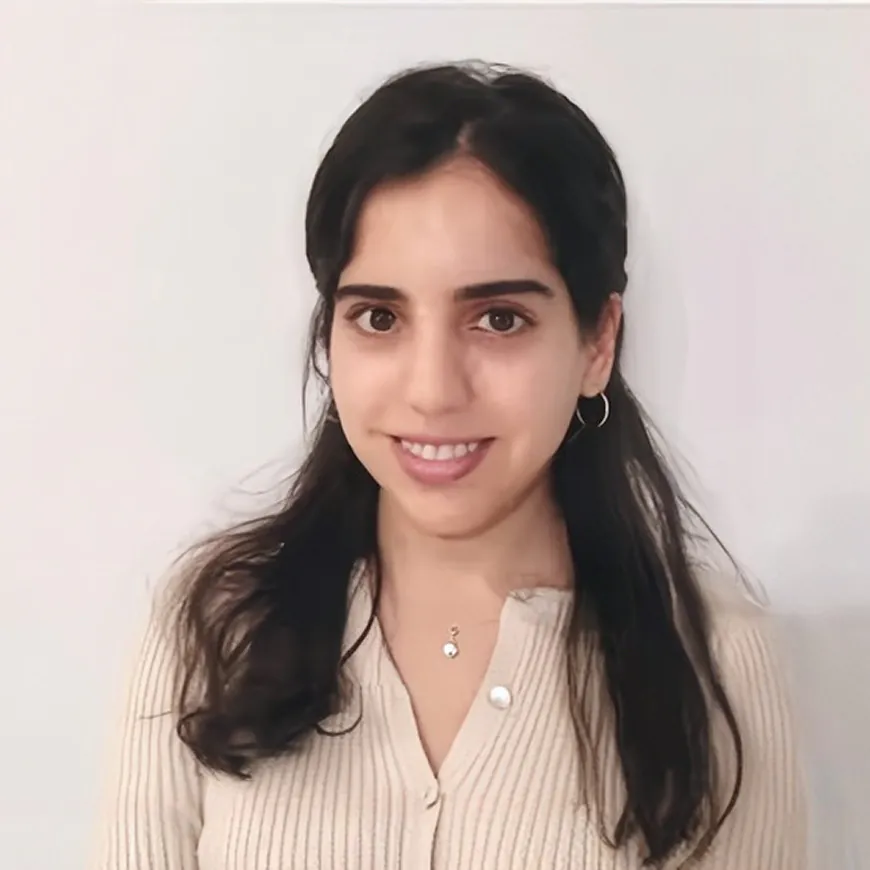
Gal Patel

Researcher
NLP MS, The Hebrew University of Jerusalem
5 years in AI research

Research focuses on agentic RAG, agent memory, and how AI support agents learn from human corrections. Research paper accepted to EMNLP 2026 as the top 5% of submissions.

How we build

The values we build by

A diagnosis is only useful if you know when to trust it. Every part of Mosaic AI is built to earn that trust.

Open by design

Every diagnosis shows its evidence and citations.

See how we do it with Assist →

Focused speed

Human review by default, with confidence thresholds you set.

See how we do it with Triage →

Build ahead

We’re building toward product-led support, where problems are caught before they become cases.

See how the Platform works →

Learning compounds

Every resolved case becomes knowledge that prevents the next one.

See how we do it with Knowledge →

Collaborate early

A dedicated AI research team works alongside yours from pilot to full deployment.

Stay curious

When Mosaic AI isn't sure, it says so and flags the case for a person instead of guessing.

Join us in changing how support works

Our team brings together AI researchers, engineers, and people who've worked in support themselves. What we share is a drive to find out why.

Learn out loud

We share context freely, bring the right people in early, and capture what we learn, so every project starts further ahead than the last.

Ask why before how

We come with strong opinions but are happy to be proven wrong, letting the evidence settle debates.

Comfortable with hard problems

We'd rather dig into a messy, unsolved problem than polish an easy one.

2 offices, one team

Tel Aviv and Toronto, working as one. We make time to connect beyond the work, from biweekly happy hours to yoga and cultural events in Tel Aviv.

See open roles  →
In their words

Support leaders who share the vision

“We have been able to scale and keep up with the demands without having to add a significant amount of headcount. With basically the same size team we had last year, we’ve made improvements.”
Senior Vice President, Point of Rental
96%
of 3,000+ self-service sessions ended without a case
Read the case study
“We see plenty of opportunities where it’s going to help us streamline our customer interactions and make us more efficient and effective.”
SVP Customer Success, Rapid7
35%
more capacity across Rapid7’s frontline teams as Mosaic expanded from support to CS and Sales Engineering.
Read the case study

One platform for every support use case

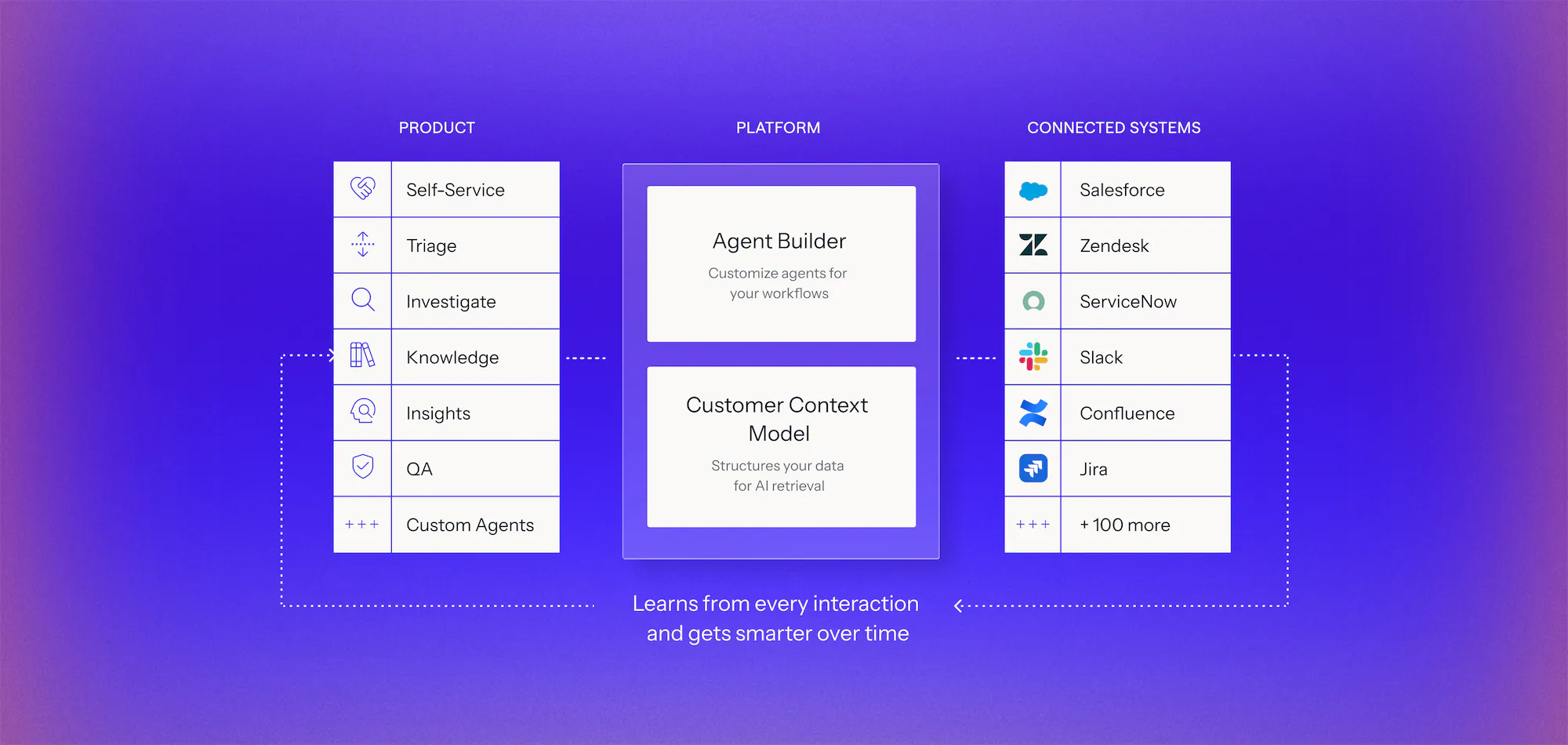
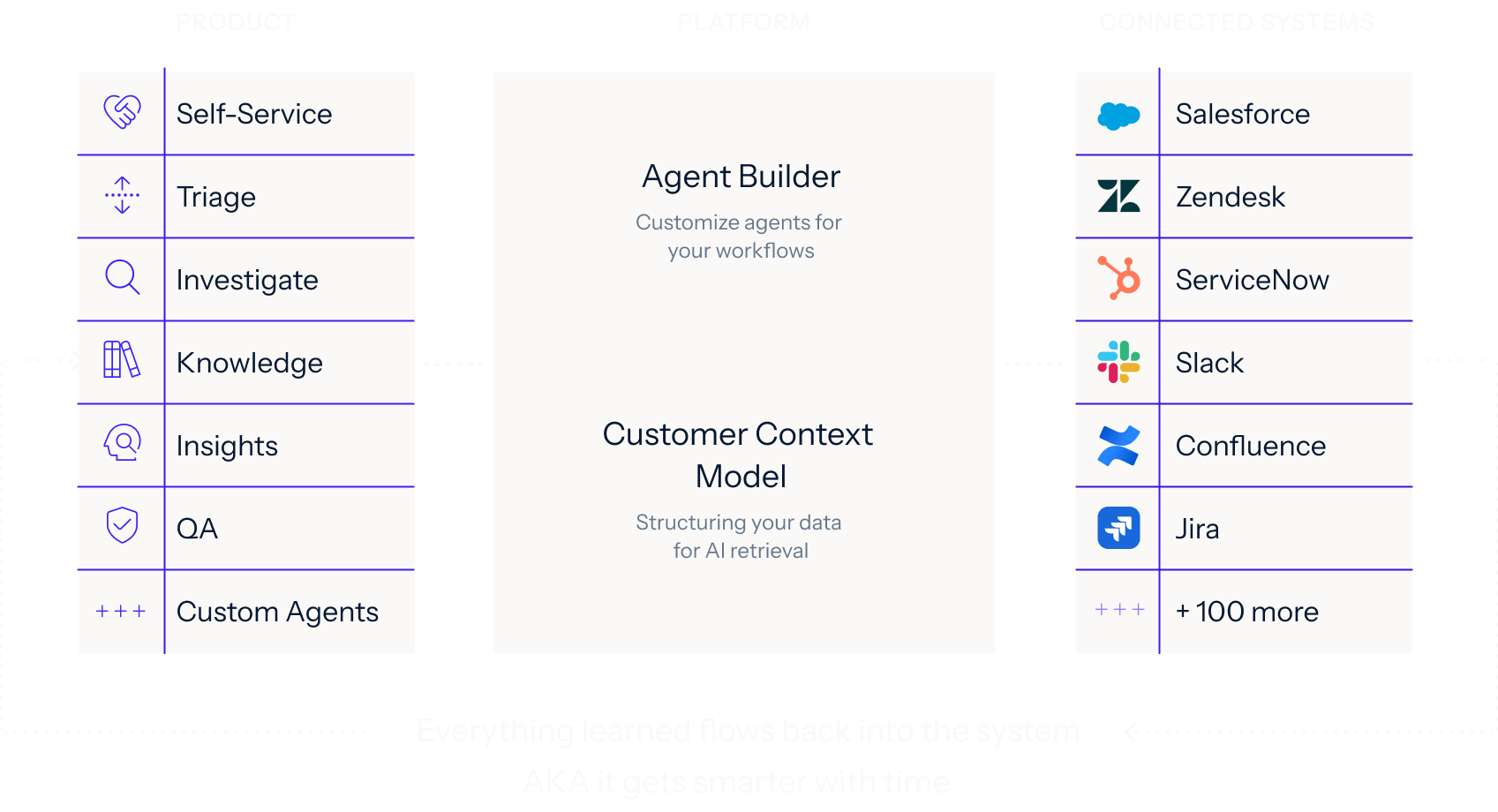
Connect your systems once, then build agents for any workflow on one shared framework. Every agent uses the same data, integrations, and controls, so you can expand without adding another point solution.

Learn more
Diagram of an AI platform architecture with three columns: Product features including Self-Service, Triage, Investigate, Knowledge, Insights, QA, and Custom Agents; Platform components with Agent Builder to customize agents and Customer Context Model for structuring data; Connected Systems listing integrations like Salesforce, Zendesk, ServiceNow, Slack, Confluence, Jira, and over 100 more, with dotted arrows showing the platform learns from every interaction and improves over time.Diagram showing three columns labeled Product, Platform, and Connected Systems. Product column lists Self-Service, Triage, Investigate, Knowledge, Insights, QA, and Custom Agents with icons. Platform column features Agent Builder for customizing agents and Customer Context Model for structuring data for AI retrieval. Connected Systems column lists integrations like Salesforce, Zendesk, ServiceNow, Slack, Confluence, Jira, and mentions 100 more. Arrows indicate data flow between columns and note that everything learned flows back, making the system smarter over time.

See it work on your cases before you commit

Book a demo
  1. 1. Discover

    We analyze your real case data, at no cost, to find where time, effort, and spend accumulate, what can be automated, and how much it would lower your cost to serve.

  2. 2. Prove

    You get a live environment built for your top use cases, running on your own systems, using your own case history. You see the result before you sign anything.

  3. 3. Go live in weeks

    Deployed on top of Salesforce, Zendesk, and the rest of your stack. No migration, no developer resources, deployment expertise included.