









Key takeaways
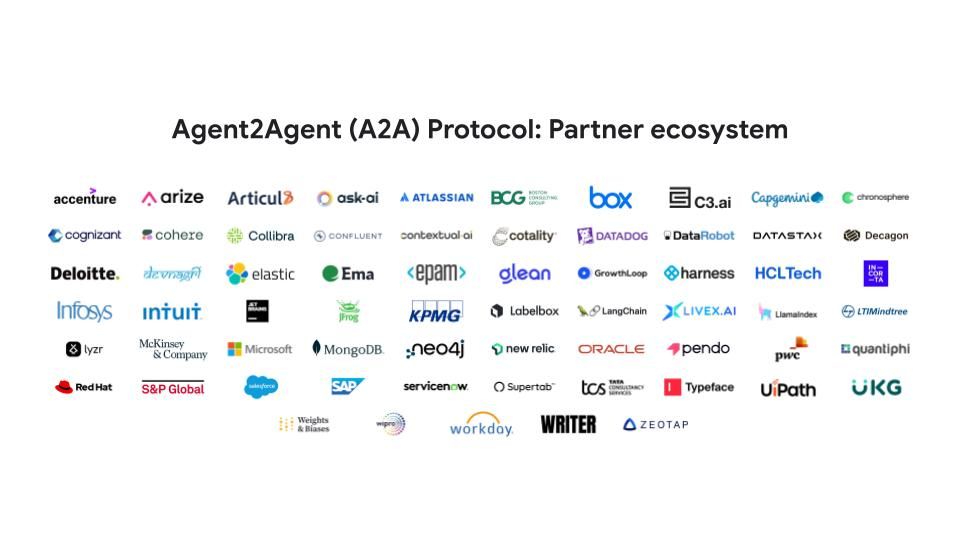
We’re excited to announce that Ask-AI is now integrated with Google’s Agent Interop Protocol (A2A)—an open standard designed to enable seamless communication and collaboration between AI agents, regardless of platform or organizational boundaries.
What is the A2A Protocol (A2A)?
As AI agents multiply across the enterprise—handling everything from knowledge retrieval to ticket triage—one major challenge has emerged: how can these agents work together without being built on the same infrastructure or sharing internal resources?
That’s where Google’s Agent Interop Protocol (A2A) comes in. A2A provides a standardized way for “opaque agents”—those that operate independently across different orgs, tools, or policies—to collaborate, communicate, and share task context securely.
Why A2A Matters for Customer Experience
AI agents are transforming CX, but fragmentation across tools and teams is becoming a real challenge:
- Organizations deploy different agents for tasks like search, summarization, triage, QA, proactive outreach, and more.
- These agents often don’t share memory, context, or a common communication protocol.
The result? Disconnected experiences, repetitive handoffs, and missed opportunities to resolve issues faster and smarter.
If Google’s MCP (Model Context Protocol) connects agents to information, A2A connects agents to each other—enabling fluid, dynamic teamwork between autonomous systems.
A2A helps solve these challenges by enabling seamless collaboration across agents with four key capabilities:
- Capability Discovery: Agents can advertise their strengths, making it easier to orchestrate the right one for the task.
- User Experience Negotiation: Agents agree on how to interact and escalate—ensuring smoother transitions.
- Task & State Management: Agents maintain a shared understanding of what’s in progress, what’s done, and what’s next.
- Dynamic Collaboration: Agents can request additional inputs, clarifications, or handoffs mid-task without losing context.
Ask-AI’s Role in A2A
At Ask-AI, our aim is to empower customer-facing teams—specifically Support, Success, and Sales—with instant access to the best answers, no matter where knowledge lives. Our AI agents are deeply embedded in the workflows of these teams, helping GTM teams focus on what matters, make better decisions, and adopt AI with greater control and clear ROI.
.png)
With A2A, our platform can now collaborate more fluidly with other agents—from internal RPA bots to third-party AI copilots—while preserving enterprise-grade data boundaries and security standards.
For example:
- A triage agent can hand off enriched context to Ask-AI for knowledge retrieval.
- Ask-AI can query a policy-specific agent in another department to verify an answer before surfacing it to a rep.
- Escalations can move across AI agents with task continuity preserved.
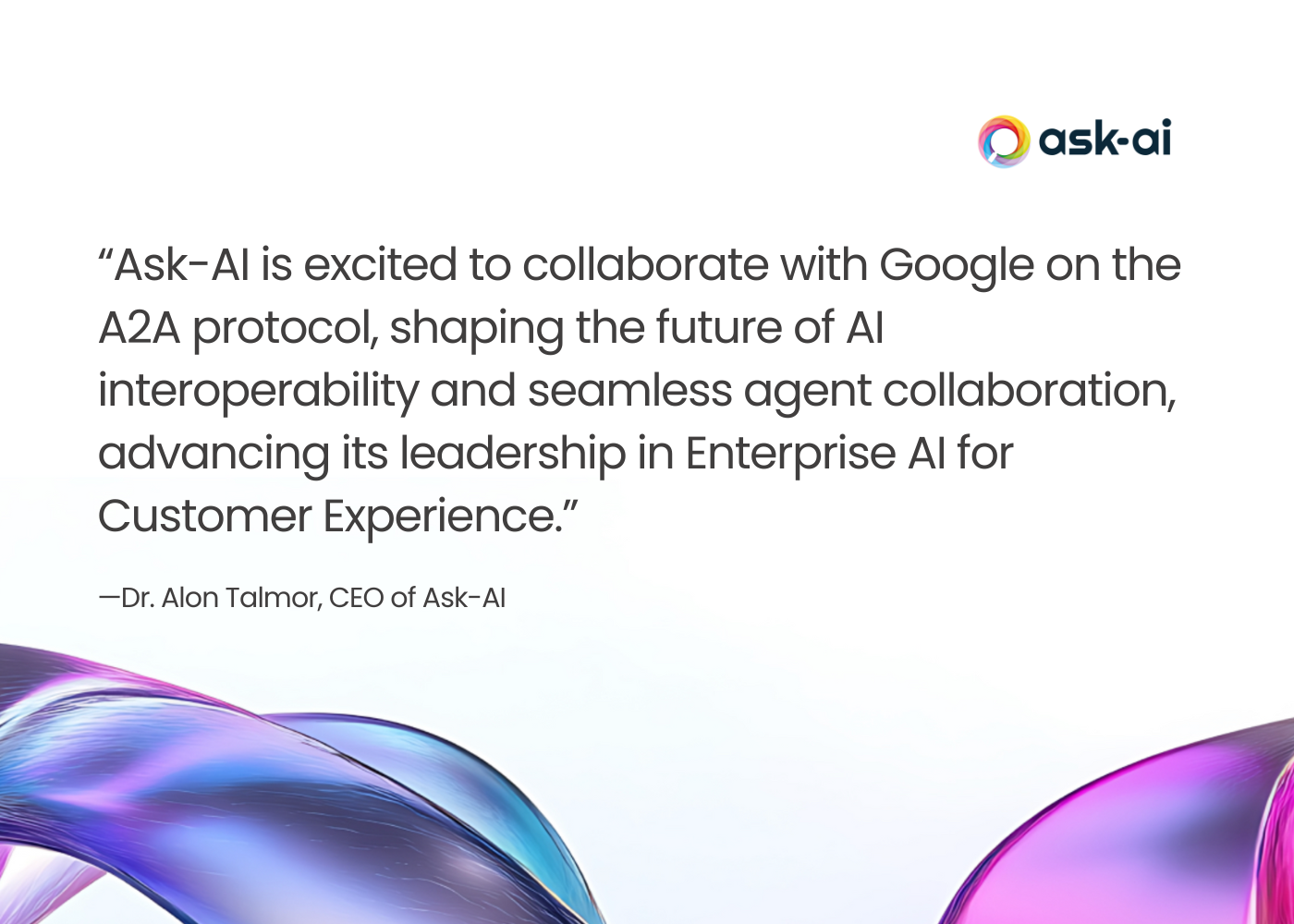
“Ask-AI is excited to collaborate with Google on the A2A protocol, shaping the future of AI interoperability and seamless agent collaboration, advancing its leadership in Enterprise AI for Customer Experience.”
– Dr. Alon Talmor, CEO of Ask-AI
What’s Next
The next wave of enterprise AI will be defined by interconnected, specialized agents working in concert. By embracing the A2A standard, Ask-AI is helping accelerate this shift—unlocking more intelligent, seamless customer experiences.
Whether you’re building your first AI agent or orchestrating dozens, A2A ensures they work together.
Explore how Ask-AI helps customer-facing teams scale knowledge, automate workflows, and now—collaborate across AI agents.
Book a demo to learn more about how Ask-AI can turn every employee into a top performer.



.png)